| LIT 499 – 04 1 course unit Prereq: LIT 101 and LIT 102 Term: Fall 2026 Time: 5:30-8:20pm W Room: Bliss Annex 153 |
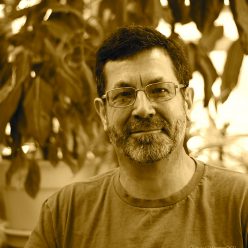
Prof. Glenn Steinberg Office: Bliss Hall 216 Office Phone: 771-2106 Office Hours: 2-5pm on Mondays or by appointment E-mail: gsteinbe@tcnj.edu |
TEXTBOOKS:
-
-
- The Fabliaux, trans. Nathaniel E. Dubin (Liveright, 2013), ISBN 9780871403575
- Guillaume de Lorris and Jean de Meun, Romance of the Rose, trans. Frances Horgan (Oxford University Press, 2009), ISBN 9780199540679
- Geoffrey Chaucer, Dream Visions and Other Poems, ed. Kathryn L. Lynch (Norton, 2006), ISBN 9780393925883
- Sir Gawain and the Green Knight, ed. and trans. James Winny (Broadview, 1992), ISBN 9780921149927
- Sir Gawain: Eleven Romances and Tales, ed. Thomas Hahn (TEAMS, 1995), ISBN 9781879288591
- Geoffrey Chaucer, The Canterbury Tales: Seventeen Tales and the General Prologue, ed. V. A. Kolve and Glending Olson, 3rd ed. (Norton, 2018), ISBN 9781324000563
-
COURSE DESCRIPTION. The official catalogue description for this course is available in PAWS.
In this section, we focus on “Ecocriticism, Unnatural Nature, and Medieval Literature.” Lots of the stories in the Middle Ages take place in “natural” settings. This section of LIT 499 examines how medieval writers conceive of and portray the natural world – in comparison with how we understand nature today and in the context of ecocritical theory and environmental sociology. We read lots of different medieval texts, including Arthurian romances, fabliaux (dirty stories that engage in social satire), and dream visions. From knights wandering in forest wilds to modern-day initiatives to encourage sustainable living, we consider how humans define, describe, and engage with the natural world.
When the College went through a curriculum revision several years ago, the vast majority of undergraduate courses were “transformed” from 3-credit to 4-credit (1-unit) learning experiences. While most of the classes continued to meet for only 3 academic hours per week, it was understood that the “transformed” courses offered a depth of learning with additional learning tasks unfolding in the equivalent of a fourth hour, including, sometimes, an actual additional hour of class interaction. As the equivalent of the fourth hour in this course,
F) students are assigned additional learning tasks that make the semester’s learning experience more deeply engaged and rigorous, and no other additional classroom space is needed.
LEARNING ACTIVITIES AND EXPECTATIONS. The principal learning activities in this course are reading, writing, and discussion. The readings that I have chosen to assign to you are the foundation of your learning. If you do not do the readings, you miss out on that foundation, so keeping up with the readings is absolutely essential. Because many of the readings for this course are in Middle English, you may find them difficult at first. Budget your time carefully to allow yourself to complete the reading assignments for class, especially early in the semester. As time goes on and you get more practice, reading Middle English will become easier for you. If you struggle with Middle English, you may read summaries or Modern English “translations” of the texts for class (online, AI-generated, or in the introductions in your textbooks), but you should always go back and read the Middle English originals before class. Summaries and translations (especially those done by AI) can be unintentionally inaccurate and misleading sometimes. Other resources for reading Middle English include Middle English glossaries of common words (and I have put a couple of these under “Files” in Canvas for you) and the Middle English Compendium (the complete Middle English Dictionary).
Upon the foundation of the course’s readings, you build by writing response papers, which are more about writing-to-learn than writing-as-assessment. Response papers are a safe, low-stress space for you to try out ideas, increase your understanding of concepts, and improve your retention of what you’re learning. By writing, you reinforce and expand the learning that you’re gaining from your reading. But in order for response papers to serve this function (helping you to think through the readings to increase understanding and deepen learning), you need to actually write them yourself. Using generative AI to write them defeats the purpose. For this reason, you are not allowed to use generative AI of any kind for any assistance with the writing of your response papers – not for brainstorming, not for the actual writing, not for suggesting improvements, not even for checking grammar and punctuation. In general, AI just spews out bad writing anyway – full of “hallucinations” (errors concerning the facts, plot, characters, concepts, or words of the assignment) and vague generalities. Such writing is one of the few ways to fail a response paper, whether you used AI to generate it or wrote it yourself.
Building on your reading and writing, discussion is also very important for your learning in this class. In general, my approach to class discussion is to begin by posing a question or problem or theme, then to have us brainstorm lots of ideas together in response to the opening question/problem/theme, then to move to evaluating the ideas that we’ve brainstormed, and finally to come to a consensus, as a class, about the best answers/solutions to the opening question/problem/theme. Your input to the discussion is absolutely critical. Even though I have taught the materials in this class many, many, many times before, no two classes have ever had exactly the same discussion about them. Different classes come up with different ideas, different solutions, different approaches. As the professor, I’m not looking for one idea or one solution or one approach in particular. I want us to think things through together – to throw out as many ideas as possible, to test and evaluate those ideas against the evidence of the text in front of us, and to draw the best conclusions that we can. We all learn so much by working together in a free and open discussion to answer a question, solve a problem, or explore a theme. I learn so much from your fresh perspectives, and you learn so much from each other. But this means that our class discussions always depend on your preparedness (how thoroughly and thoughtfully you’ve done the assigned reading) and on your courage (how willing you are to take risks, brainstorm, and share ideas – even when your ideas are only half-baked). I can’t make a good discussion happen. Only you all can do that. I can work to create a classroom space that feels safe, and I can pose provocative questions for us to discuss, but a good discussion – along with the incredible learning that comes from it – only happens if you all come to class prepared and willing to join in.
GOALS. In this course, I want you
-
-
- to grow ever more responsible for and independent in your own learning,
- to improve cognitive endurance in order to be better able to complete readings of considerable length and complexity,
- to be more aware of, question, and enrich your basic assumptions about language, culture, and literature,
- to recognize that human cultures from different times and places construct “nature” differently and that their constructions of nature affect human behavior toward the environment,
- to recognize a variety of medieval texts of different genres,
- to analyze medieval literature and culture from an ecocritical perspective, elucidating complex issues and suggesting additional avenues of critical inquiry,
- to think theoretically, moving beyond issues of specific textual analysis into more abstract modes of thinking,
- to conduct advanced research in the humanities by building upon the basic research skills first introduced in Approaches to Literature,
- to demonstrate the kind of intellectual independence and sustained, critical thought required for the production of high-quality literary, linguistic, textual and/or rhetorical scholarship,
- to discover, assert and insert your own critical “voice” into the ongoing dialogues, critiques, and debates that characterize the humanities, and
- to demonstrate greater facility with critical practices in the field of English.
-
Also, the following goals for the English Department, the College Core, and the School of Humanities & Social Sciences apply in this course:
#1 Written Communication
#2 Oral Communication
#5 Critical Analysis and Reasoning: Ability to critique the arguments of others in the discipline and the construction of one’s own arguments in the discipline, using data/evidence as a focus of instruction and/or the ability to analyze linguistic and cultural patterns
#6 Information Literacy: Evaluating the validity and/or reliability of a source
#7 Interpret Language and Symbol
#12 Students will be able to demonstrate familiarity with a range of critical, generic, and literary traditions (including recent theoretical approaches) that shape – and are shaped by – literary discourses and texts of particular periods or movements
#15 Students will be able to read a literary work and characterize its main aesthetic, structural, and rhetorical strategies in an argumentative, thesis-driven essay or in a writing workshop
#16 Students will be able to write a substantial essay of literary scholarship that is theoretically informed and engages with current research and criticism in relevant fields of study, asserting their own critical voice in ongoing dialogues and debates
#17 Analyze how creative texts, artworks, or performances reflect, shape, exalt, or challenge the values of a culture
REQUIREMENTS. For this course, you must complete the following graded assignments:
-
-
- six two-page response papers (together worth 20% of your final grade),
- two research assignments (worth 10% and 20% of your final grade),
- a seminar paper (worth 30%), and
- a comprehensive exam (20%).
-
Your final grade will be based on the following scale: A = 93%-100%, A- = 90%-92%, B+ = 87%-89%, B = 83%-86%, B- = 80%-82%, C+ = 77%-79%, C = 73%-76%, C- = 70%-72%, D+ = 67%-69%, D = 60%-66%, and F = below 60%. This scale is absolute. Because the response papers are in a sense a form of extra credit built into this course from the start, I do not give extra credit at the end of the semester to help students raise their grade even a whisker. So, even if, at the end of the semester, you are just .001 points away from an A-, your final grade will be a B+.
RESPONSE PAPERS. In the course of the term, you are required to submit six short, informal papers (about 2 pages each) on the reading assignments for class from literary texts. You may choose for which days you want to write a response paper, as long as you have completed six response papers by the end of the term. For each response paper, choose one of the following topics and analyze the reading assignment from the literary text(s) for the day with respect to the topic you’ve chosen:
-
-
- Defining Nature. What is the opposite of “natural” in the reading assignment? Is it art(ifice), culture, technology, human society, convention, the human-made, or whatever humans have interfered with? Is it whatever is violent, destructive, evil, or polluting? What is “natural” in the reading assignment? Is it what’s “out there” as opposed to what’s “in here”? Is nature whatever is innocent, wise, and unchanging? Is it defined by its being unreflexive and unpremeditated? Is it the opposite of society and inequality? Is it whatever is moral and beautiful? Is nature good and the opposite of nature bad, or vice versa? Is nature static and the opposite of nature dynamic, or vice versa? What is human nature in the reading assignment? Is it self-interest, instinct, solitary individuality, or something else entirely?
- Landscapes. What landscapes are created in the reading assignment? What meanings are conferred on the natural world? How are natural spaces shaped or defined by social and cultural contexts? Does the same physical space embody different landscapes to different people (including the author, audience, and characters)? Are these different landscapes complementary or competing? How do landscapes reflect the self-image and belief structures of the people who transform physical space into the landscapes? How are the landscapes reified (taken for granted, made to seem as though they have always existed in exactly the same way)? How does the meaning of the landscapes change (or not change) with environmental or technological changes?
- Cyborgs. How does the reading assignment break down the boundaries of dualisms – such as those between male and female, human and animal, technology and nature? What monsters and “cyborg” figures show up in the reading? What kinds of disruptive technologies exist in the text? In what ways do technology and nature meld or transgress boundaries? Are boundaries later reinforced or reproduced? Where do you see an emphasis on the strict integrity of objects or people? How do cyborgs and monsters in the reading help redefine the proper limits of community and shore up the boundaries between traditional dualisms? How do they threaten or erase those boundaries?
- Naturework. How does the reading assignment make sense of and express the relationship of humans to the environment? Into which competing ideological vision of nature does the text seem to fit – protectionist, organicist, or humanist? Is the reading misanthropic, viewing human beings as a blight upon an authentic, uncontaminated natural world? Is the text romantic or pastoral, viewing humans as simply part of an organic whole with nature rather than alienated from it? Does the reading view nature solely as a resource or tool to be tamed and used to serve human needs according to human choices? Does the reading want to protect nature, embrace it, or use it?
-
Keep in mind that some topics are more relevant to some readings than others (and some topics aren’t relevant at all to some readings). Don’t choose to focus on a topic for a reading for which that topic is irrelevant.
You should submit each response paper by “sharing” it with me as a Google Doc before class on the assigned day. Be sure to grant me “editing” or “commenting” status when you share the Google Doc with me (so that I can comment directly on the paper). Please note that, when you do a response paper, you are writing about the reading assigned for the day on which you’re submitting the paper. So, you’re writing about the reading assignment before we discuss it in class and submitting your response paper before the class meeting for which that reading is assigned. You may not submit a response paper about a past day’s reading assignment.
Response papers are graded Pass/Fail, so they need not be a perfect, polished product. Rather, response papers should be just what their name says – a response. Think about one of the topics that I have asked you to consider above; then write a response. Don’t worry about typos or comma splices or organization. Don’t worry about answering every question I ask under a particular topic. In fact, focus on the one question that seems most interesting to you, and be as specific as you can, getting down as much as you can, as quickly as you can. Treat response papers more like a journal entry than like a formal paper. I don’t want a five-paragraph theme. Rather, I want an exploration – as detailed and specific as possible – of the assigned reading for the day. But don’t focus too narrowly on just one passage from the assigned reading. Try to generalize about the reading and then look at several specific examples and passages to support your generalization.
Normally, as long as you submit a response paper of suitable length, detail, and thoughtfulness (and as long as you submit it before class on the assigned day), you will receive all the points that the response paper is worth. You may submit more than six response papers in the course of the semester (to make up for any response papers that do not pass), but no matter how many extra response papers you turn in, you will not receive credit for more than six total. You may not submit more than one response paper for a single day’s reading assignment, nor may you submit a response paper for a day that you are absent from class. But you may submit more than one response paper on the same text if there are multiple reading assignments spread over multiple days from that text. The response papers should then each be on the specific reading assignment for each specific day. NOTE: You may not submit a response paper for a day without a specific LITERARY reading assignment for class (e.g., exam days or a day with only scholarly articles for readings), and you may not write a response paper about a non-literary reading (e.g., a scholarly article). ALSO NOTE: Even if you do not submit a response paper on a particular day, you should still come to class prepared to discuss the response paper topics in relation to the assignment for the day, because we will focus on these topics in our in-class discussions all semester. In other words, the response paper topics above are a great guide for your class prep and studying every day, even when you’re not writing a response paper.
The purpose of the response papers is
-
-
- to help you in your preparation for class discussion,
- to allow you to try out new and different ideas in a safe, low-stress space,
- to help me see where you’re struggling with the concepts in class,
- to help you reinforce and expand on what you’re learning in class, and
- to help you develop your intellectual independence and confidence.
-
In order to accomplish these goals, you really need to write your response papers yourself without the help of AI, so you are not allowed to use AI of any kind for any assistance with the writing of response papers – not for brainstorming, not for the actual writing, not to suggest improvements, not even for checking grammar and punctuation. In general, AI just spews out bad writing anyway – full of “hallucinations” (errors concerning facts, plot, characters, concepts, and words) and vague generalities. Such writing is one of the few ways to fail a response paper, whether you used AI to generate it or wrote it yourself.
You also may not work together with classmates on your response papers. Just as using AI defeats the purpose of writing the response papers, getting ideas from a classmate or imitating what they write does not help you to deepen your learning or to try out and practice new ideas.
EXAM. The exam in this course is an assessment of how well you are learning, understanding, and retaining the material in class. The exam asks you to identify quotations that were important in our class discussions and to explain the reason(s) that they were important (i.e., what concepts, themes, or meanings we discussed in relation to them). The quotations are usually ones that we discuss at length together, although some quotations may be less discussed in class but still central to the plot and themes we discussed in relation to the work from which they come (and therefore reasonable passages for you to be able to identify and relate to our class discussions). In addition, the exam assesses your retention of important character names, settings, critical terms, and concepts by asking you to identify and describe them in a couple sentences or bullet points. Finally, the exam offers you the opportunity to draw together the different strands of what you’ve been learning in class in an essay that asks you to look broadly at overarching themes and ideas. The exam will be open-note but NOT open-book.
RESEARCH ASSIGNMENT 1. Find at least six scholarly sources (journal articles or book chapters) related to The Merchant’s Tale. As much as possible, these sources should be recent (published within the last 30 years) and should be the best, most significant sources that you can find – not simply the first six available. Once you have chosen your sources, compose a brief description that situates the sources in relation to one another (absolute maximum of 1 page, not including your “Works Cited”). What is the “conversation” in which these sources are engaged (literally or figuratively)? What are the various positions that the participants take in that conversation? Do not simply summarize one source after another. Put the sources in relation to one another within a larger narrative of an unfolding conversation about the tale.
Use the scholarly articles that we read for class on The Miller’s Tale as models. How did they summarize the scholarly conversation on the tale in their articles? Your paper should probably be shorter than their summaries (because you are likely describing fewer sources than they did), but it should follow the same style and format.
As you think about how to characterize the critical conversation on The Merchant’s Tale, consider the following questions:
-
-
- What is the main point of each of your sources? Do all the main points relate to each other in any way – i.e., explore similar ideas, hold similar or contradictory views, focus on the same figure, episode, or theme, consider the same philosophical question about the tale?
- If they tend to focus on the same figure, episode, theme, or philosophical question, do they tend to view that figure, episode, theme, or philosophical question in one or two different ways? In other words, can you group them as looking at the figure, episode, theme, or philosophical question either this way or that way?
- If they tend to explore similar ideas (such as gender, social class, genre, aesthetics), do they tend to explore those ideas in one or two different ways? In other words, can you group them as looking at the same thing either this way or that way?
-
If it helps you in thinking about how to put your sources into conversation with one another, come up with a thesis of your own about The Merchant’s Tale. How would the authors of your different sources react to your thesis? Would they agree with you? Would they disagree? Can you group them by how and why they would agree or disagree with you? Which sources would (dis)agree with you for one reason vs. another? Which sources would (dis)agree with you for essentially the same reason? Once you’ve characterized the “big picture” of the conversation and the groupings that you’ve put your sources into according to their reason(s) for (dis)agreeing with you, describe how the main point of each source is in agreement or disagreement with your thesis.
Your paper will be assessed based on the following criteria:
-
-
- Does the description of the sources have a clear logic of its own? Rather than summarizing one source after another after another, does the description situate the sources in conversation with one another in a meaningful, interesting, and accurate way?
- How many sources does the paper use and how recent and important are they? Are the sources that are used the most significant and authoritative sources available (e.g., published in the most authoritative books/journals, written by important scholars, cited by other sources)?
- Is the description of the sources and their conversation with one another accurate and impartial? Do the characterizations of the individual sources represent their arguments fairly? Are statements about the individual sources valid and not misleading in any way? Are characterizations of each individual source clear enough to give a proper understanding of the main point of the source to someone who is unfamiliar with it?
- Does the paper have unified, well-developed, and coherent paragraphs?
- Does the paper use proper MLA documentation format, including a correct and complete “Works Cited” page?
- Is the writing in the paper clear, effective, and appropriate to an academic setting?
-
RESEARCH ASSIGNMENT 2. Do the same exact assignment as for Research Assignment 1, but do it for Sir Gawain and the Green Knight instead of The Merchant’s Tale. Your paper will be assessed according to the same criteria as for Research Assignment 1.
SEMINAR PAPER. In a seminar paper of 15-20 pages, argue a clear, specific, original thesis with an ecocritical focus about a medieval text of your choice that we have not discussed in class. For your medieval text, I recommend one of the other Gawain romances in Sir Gawain (such as The Awntyrs off Arthur) or one of Chaucer’s other works in The Canterbury Tales (such as The Knight’s Tale or The Nun’s Priest’s Tale) or in Dream Visions and Other Poems (such as The Legend of Good Women), although you may also look at https://metseditions.org/texts to find other texts of potential interest (such as Sir Degaré or Sir Orfeo). I expect you to show sophistication in terms of your theoretical thinking and to enter into the critical conversation going on in scholarly articles and books on your chosen text and topic, saying something new while also responding to what others have said before you.
Your seminar paper will be evaluated according to the following criteria:
-
-
- Does the paper have a clear, specific, original thesis? Does the thesis offer an interesting perspective or “hook” that is sophisticated in its theoretical thinking and provocative without being gimmicky or offensive?
- Does the paper use a variety of scholarly sources (rather than rely heavily on a single source)? Does the paper characterize the critical conversation on its topic and enter into that conversation in a meaningful way? Does the paper summarize information and arguments from its scholarly sources and from the critical conversation accurately and fairly? Does the paper respond to its scholarly sources critically and thoughtfully (rather than simply cite sources to lend authority to its own pronouncements)?
- Does the paper engender confidence that its research is reasonably authoritative and complete? As much as possible, are the paper’s sources recent (i.e., published within the last 30 years)? Are all the paper’s sources appropriately scholarly and authoritative?
- Does the paper’s organization progress logically? Does the paper have a clear and consistent overall organization that relates all the ideas of the paper together in support of the thesis (rather than simply list random observations without relation to one another or to the thesis)? Does the paper have appropriate transitions to aid the reader in following the paper’s logic (rather than weak transitions, such as “The first…,” “Another…,” and “…also…”)?
- Are the paper’s paragraphs properly developed – neither too long and wandering nor too short and deficient? Are the topics of individual paragraphs suitably narrow and focused on a single claim rather than vague and focused on a broad theme? Once a paragraph gets specific about anything, does it stay focused on that specific topic to the end?
- Does the paper provide relevant, concrete evidence and logically persuasive reasons for every assertion? Is factual information in the paper accurate?
- Does the paper show sensitivity to the concrete historicity of the text(s) under consideration (rather than treat texts as timeless museum pieces or reflect on them anachronistically)?
- Does the paper exhibit confidence and insight when analyzing passages, texts, and scholars not discussed in class?
- Does the introduction to the paper offer an interesting, helpful preview of the content, logic, and organization of the paper?
- Is the writing in the paper clear, effective, and appropriate to an academic setting?
-
You are required to submit a topic paragraph leading up to your seminar paper. This topic paragraph is simply a paragraph in which you describe the topic that you’re planning to write about in your paper. You are also required to attend at least one conference a couple weeks before the seminar paper is due. At these conferences, you should be prepared to summarize the progress that you have made on your seminar paper up to that point and your plans for the future. You should also be able to show copies – printed or electronic – of all notes, sources, and drafts that you have accumulated so far (because I may ask you at the conference to show me a particular source that you’ve mentioned or a section of the draft of your paper that we’re discussing). I will not, however, read the entire draft of your paper and critique it for you. I want you to become more self-reflective and self-reliant when it comes to your own writing, and so, I want you to identify the weaknesses in your paper on your own (and ask me about them) rather than have me read your entire draft and identify the weaknesses for you. The due date for the topic paragraph and the dates for the conferences are noted in the course schedule below.
If you fail to submit your topic paragraph or miss a conference, your seminar paper’s grade may suffer.
LANGUAGES ACROSS THE CURRICULUM. A quarter-unit (one-credit) Languages Across the Curriculum independent study may be added to this course for students who have intermediate level proficiency in French and who wish to complement the work in this course by utilizing their language skills. Students should complete this google form (https://forms.gle/
PROFESSOR’S AVAILABILITY. My office is Bliss Hall 216. My in-person office hours this term are 2-5pm on Mondays. If you have questions about class (or just want to talk about stuff), feel free to stop by my office during these hours (no appointment necessary). I can also meet over Zoom during my office hours if that’s more convenient for you; just let me know, and I’ll send you a Zoom invitation. If you cannot meet during my regularly scheduled office hours, talk to me about meeting at another time, and we can set up an appointment. Outside of class, you may contact me by email (gsteinbe@tcnj.edu) or by calling my office phone (609-771-2106) and leaving a message (if I do not answer), but email is usually the best way to get in touch with me. You may also leave a written message for me in my box at the English Department offices in Bliss Hall 124.
ATTENDANCE. Regular attendance is a virtual necessity for successful completion of this class. Class discussion constitutes important, useful preparation for your graded work. If you miss a class, you will essentially lose out on that day’s contribution to your preparation, since it is never really possible to reproduce or recapture the dynamics and flow of information for a missed class meeting (even if you get notes from someone). If, however, you positively must miss a class, I expect you to find out from a classmate what you missed and to come fully prepared – without excuses – to the next class meeting. If you must miss an in-class, graded assignment due to a religious holiday, let me know ahead of time, and we will arrange a way for you to make up the assignment.
ACADEMIC INTEGRITY. Academic dishonesty is any attempt by a student to gain academic advantage through dishonest means, to submit, as your own, work which has not been done by you, or to give improper aid to another student in the completion of an assignment. Such dishonesty would include, but is not limited to, submitting as your own a project, paper, report, test, or speech copied, partially copied, or paraphrased from the work of another (whether AI-generated, in print, on the Internet, or from another student). Credit must always be given for words quoted or paraphrased and for ideas or information taken from somewhere else. The rules apply to any academic dishonesty, whether the work is graded or ungraded, group or individual, written or oral. Most people who cheat do so out of desperation, because they are struggling to understand an assignment or lack time to do it. Please, please, please, if you ever need help with an assignment or need an extension on a deadline, let me know rather than resort to cheating.
ACCOMMODATIONS. The College of New Jersey prohibits discrimination against any student on the basis of physical or mental disability or perceived disability. The College will also provide reasonable and appropriate accommodations to enable students with disabilities to participate in the life of the campus community. If you require such accommodations, I will make every reasonable effort to meet your needs and to create an environment where your special abilities are respected. Go to the website of the Accessibility Resource Center (ARC) for more information about how to arrange for such accommodations.
DIVERSITY AND INCLUSION. We are all enriched by greater diversity, and we all bring different perspectives to this class. I want to create a learning environment that supports diversity and honors your identities and perspectives (including your race, gender, sexuality, social class, religion, mental and physical health, differing abilities, politics, etc.). If, for example, you go by a name and/or set of pronouns that differ from those that appear in your official records, please let me know. If you feel that your performance in class is being impacted outside of class by a hostile environment related to your identity, please don’t hesitate to talk to me. If something is said or posted in class (by anyone, including me) that you consider hostile or offensive to your identity, please talk to me about it. I will expect our whole class (including me) to strive always to honor every form of diversity. See also TCNJ’s statement on inclusive excellence at https://inclusion.tcnj.edu/inclusive-excellence-statement/.
SCREENS. Unless required as an accommodation for a physical or mental disability, you may not use screens (laptops, phones, or ipads) during class meetings for this course. In the last ten years, there has been a ton of research that shows that screens are bad for learning – that you are less likely to remember what happens in class if you take notes on an electronic device rather than with pen and paper, that you are less likely to comprehend and remember what you read if you read it on a screen rather than in a printed format, and that you are more likely to be distracted and miss things in class if you use an electronic device during class time. I am not a Luddite (someone who despises all technology); I love my screens and use them a lot. But I have watched a lot of students, especially over the last ten or so years, perform much worse in my classes than they could (or should) have performed, because they used screens for taking notes and reading. And my anecdotal experience with students over the last decade is nothing in comparison with the towering tsunami of research that shows just how bad screens are for learning in the classroom.
For that reason, you may not use any electronic devices during our meetings for class. Note that, if we ever need during class to look at a text, document, or assignment that is online, I will display what we need on the large screen at the front of the room. You will not need your own screen.
CLASSROOM ENVIRONMENT AND COMMITMENT TO STUDENT SUCCESS, SAFETY, AND WELL-BEING. The TCNJ community is dedicated to the success, safety, and well-being of each student. TCNJ strictly follows key policies that govern all TCNJ community members’ rights and responsibilities in and out of the classroom. In addition, TCNJ has established several student support offices that can provide the support and resources to help students achieve their personal and professional goals and to promote health and well-being. You can find more information about these policies and resources at the “TCNJ Student Support Resources and Classroom Policies” webpage at https://academicaffairs.tcnj.edu/tcnj-syllabus-resources/.
Students who anticipate and/or experience barriers in this course are encouraged to contact the instructor as early in the semester as possible. The Accessibility Resource Center (ARC) is available to facilitate the removal of barriers and to ensure reasonable accommodations. For more information about ARC, please visit https://arc.tcnj.edu/.
AI STATEMENT OF THE SCHOOL OF HUMANITIES & SOCIAL SCIENCES. The School of Humanities and Social Sciences aims to strengthen students’ independent reading, writing, and critical-thinking abilities. We expect students in our courses to think, write, and read for themselves without the use of Generative Artificial Intelligence (AI) tools.* As a rule, Generative AI tools are not allowed in HSS courses without the instructor’s permission. It is the students’ responsibility to consult with their instructor about whether they allow the use of Generative AI tools in the course. This policy reflects the School’s overarching commitment to cultivating foundational academic skills that form the basis of rigorous scholarly inquiry and practical application. *Accommodations must be approved through ARC.
COURSE SCHEDULE. The schedule below is subject to revision at the discretion of the professor. Changes in the schedule made after the first day of class will be shown in red.
| Date | Assignment/Topic |
| W Aug 26 | For this class meeting (and this class meeting only), we will not begin class until 6:30pm (and we will not take a break mid-class).
|
| W Sep 2 | |
| W Sep 9 |
|
| W Sep 16 | |
| W Sep 23 |
|
| W Sep 30 |
|
| M Oct 5 | RESEARCH ASSIGNMENT 1 DUE in Canvas by 11:59pm |
| W Oct 7 |
|
| W Oct 14 |
|
| M Oct 19 | RESEARCH ASSIGNMENT 2 DUE in Canvas by 11:59pm |
| W Oct 21 |
|
| T Oct 27 | LAST DAY TO WITHDRAW FROM CLASS WITH A W OR TO REQUEST UNGRADED OPTION |
| W Oct 28 |
|
| W Nov 4 |
|
| W Nov 11 |
|
| W Nov 18 | NO CLASS (individual conferences) |
| W Nov 25 | NO CLASS (Thanksgiving Break) |
| W Dec 2 | NO CLASS (individual conferences) |
| FINAL EXAM PERIOD | SEMINAR PAPER DUE in Canvas by 12:50pm |